Flashpoints

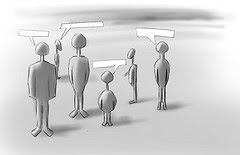
I once read a quote by one of my favorite playwrights, Beth Henley. She said that, to get a script moving, you take two characters, and you get them into an argument.

A couple of months ago, I was working on a script that had stalled. So, I took Henley’s advice. I put the protagonist and her sister into a fight that had been a long time brewing, and suddenly the protagonist found her voice for the first time. I could hear her in my head exactly the way she would sound! That’s one of those events that a writer hopes will happen in every project.

There’s something about a dramatic exchange motivated by frustration and hurt that removes the inhibitions we subject ourselves to under normative societal expectations, and permits what’s in our souls to pour out…the good, the bad, and the ugly, all of which would likely have been otherwise self-censored. Two people discover exactly what is on the other’s mind, and the elephant in the room is abruptly revealed in those “heated exchanges.” In the script of my life, I hate it when it comes to that point. Karen and I have experienced a few of these “heated exchanges” in our marriage. None of them have been pleasant, and, at least at first, were the result of small things that could have been talked out calmly instead. In more recent times, however, I’ve found these arguments to be catalysts. When you place two lives together, they move on a continuum. Ideally, they move forward together, and make progress. Sometimes, like my script, they stall. I’ve found a profound truth, however, in the fact that you never stay still on a continuum for very long. You either regain momentum, or begin to slide backward.

Karen and I had two ground-breaking discussions recently that have been incredibly healthy for our marriage. They were the result, at least in part, of an argument that occurred because a handful of issues had overheated. Now, ideally, those issues would have been handled individually before they reached that point. Not as dramatic, and it doesn’t make for nearly as good a script, but it’s better for my blood pressure when I’m the one arguing. This recent argument became a catalyst that propelled us forward, restoring momentum when we had began to drift backward.

I suppose that, when two people stall out, you can take them and put them into an argument…

I’m thinking of this tonight as I listen with a heavy heart to the sounds coming through the wall of our apartment. As well-constructed as our building is, you cannot help but hear when someone yells at a certain volume. That particular argument was punctuated by “blah blah blah” and “f***k you.” Not pleasant to hear. I’m aching for the people (I presume a couple) involved. I’m hoping that this serves as a catalyst to restore forward momentum for them, so that they won’t digress backward.

When an actor is preparing a script, two of the first questions that they ask themselves are: what does the character want, and what is keeping him from getting it? That is the motivation for our theatre of life, as well. These moments of friction occur because we are experiencing frustration at an inability to get what we feel we (sometimes desperately) need. Psychology tells us that behaviors are a way of getting what we want, or obtaining a desired result. Theatre calls this conflict, and it is the essence of a story. Without conflict, the plot doesn’t move. How unfortunate that, no matter how hard we endeavor to make it otherwise, we don’t seem to experience the positive until we’ve waded through the negative. As Buechner would have said, we have to experience the tragedy before the comedy, and both before the fairy tale.

I hope that your conflicts…these unfortunate flashpoints that ignite between us and those we love… always move you toward a more positive place.

And now, perhaps I should re-visit that script from a few months ago…

Photo Attribution: 

Ocean View

I’ve groaned a lot about Spring in the Southeast lately. When I lived in the Northeastern U.S., winter was the season I dreaded most. I was excited to move south, because I knew that I would no longer have to dread the days on end with only the most obscure sunlight, endless slush and white landscapes, and dreary grey skies. I was right, of course. Those experiences are all but extinct here. What I didn’t expect was that winter would be replaced by spring as my most hated season, because I have never experienced allergies of this magnitude. The first time I saw my car yellow with pollen, I couldn’t fathom what was happening.

Such is life, right?

I remember my introduction to Florida well. While I didn’t grow up in a coastal area, the beach seduced me with its beauty on my first visit, and I’ve longed for it ever since. That evening, only slightly tired after a relatively normal travel day, I stood with a friend looking out off of the parking deck of the airport and was stunned by what I saw. Later, driving over the water, I nearly lost my breath. The following day, walking the white sand of Clearwater Beach and watching the sunset over the Gulf at the end of the day, I was so hopelessly in love with that place.

I’ve never been back to Florida, despite every intention to return. As summer nears, and I watch the change in the way the evening light falls over the streets and hills of Virginia, I find myself wishing desperately that I was back in Tampa. I think, also, that the place, as much as I loved the area, is somewhat metaphorical for where I otherwise find myself positioned in life; that is, somewhere I have tasted and in which I long to exist, yet find so incredibly elusive at the moment.

Career goals play into that discontent. I’ve lived the 9-5 grind, and I am so, so over that now. I no longer define my success by moving into the corner office (amazing how it doesn’t matter after you’ve achieved it). I’ve made moves forward: I continue to experience the addictive rush of theatrical magic when the lights warm the stage, and, while I haven’t sold the “Great American Novel,” I am not un-published for the last few years, either. Yet, I am longing to reach a place in life that I feel I should already have attained given the fact that I’m only a few years south of 40, and feel as though I haven’t been paying nearly enough attention to dreams and wishes along the journey.

Blah on professional wardrobes and corner offices, anyway.

I’ve tasted the ocean air with a scandalous passion, and yet have never been able to hold onto it for the long term. I’m just too stubborn, though, to give up hope, because I know that I will eventually wake up every morning to that metaphorical sand and ocean (hopefully with an identical geographical experience). Yet, I don’t want to call it achievement, because that makes everything, again, about success and material gain, which I’ve discovered to be worthless in and of themselves. This is about doing what I’ve realized is in my DNA, the piece of my soul I’ve discovered requires feeding to remain in possession of any sort of vitality…a “something greater” to which success must be attached if it is to have any significance.  I’m experiencing that in fleeting moments now, but am forcing myself to remain confident that the experience will be consistent in the future.

Until then, I cope with spring. Feel free to send me postcards of coastal sunsets. One day, I’ll be happy to return the favor when needed.

Monday Night Rambings

So, I’m sitting at the local Panera Bread thinking about what sort of post I’m going to write this week, and the only thing that’s making my brain work is the couple that is sitting sort of diagonally to me across the restaurant. They’re a college-age couple, very obviously on a date. The guy’s body language is open, inviting. The girl’s body language is a little coy, playfully interesting without being all-out flirtatious. After the guy brought the food back, he looked like he was praying briefly…”giving thanks,” I imagine…and she was respectfully quiet, but stole a curious glance at him for something he said, then smiled and closed her eyes again quickly. When he looked down at his meal before starting to eat, she slipped her chewing gum out of her mouth and secreted it into a napkin completely incognito from his awareness. I can’t help but smile. They’re a cute couple.

Before you start thinking I’m weird, let me say that any writer or actor or painter or anyone else of a creative bent is always observing those around them…seeing people, watching interactions, analyzing mannerisms. Creativity comes from the stuff around us, from the people around us. We’re surrounded by our inspiration constantly. The problem is, we stop to really observe it so infrequently that we’re sort of surprised at the depth of it when we do.

At least, that’s the unfortunate pattern into which I feel myself lapse. This afternoon I found myself with the much-coveted opportunity to slow down and have a quiet 30 minutes. I had time to read, to stop and think about what I had read, to let my thoughts wander. Now, at the risk of sounding mystic (not that I’m opposed to that), I felt so much more connected to the life around me. People, animals, even flora and fauna. Not that I was experiencing a pantheistic euphoria, but instead I had just had enough space and quiet to allow the things that are dulled into the background by a hectic life to return to the foreground. As always, I re-discover that the foreground is, in fact, their rightful place.

That pleasant state of mind and awareness was broken all too quickly when I once again had somewhere to be, and life intruded afresh as I navigated through traffic, listening to the voice of my GPS instruct me as to where I should turn, and worked on beating the deadlines of things to complete before arriving at home in time to prepare for guests…you get the idea.

Tonight, however, now that I find myself again with a few moments to spare, I am still much more aware of what and who is around me than I was this morning. This is the stuff from which creativity flows, because it is life…and creativity is about life, and portraying it in its comedy and its tragedy. That life is what gets lost in the rush of our day to day, because we stop seeing the forest for the proverbial trees. Then, when we pause to realize just how cool the trees are, we’re stunned as though we’ve never experienced them before.

So, my hope for you this week is that you find a shockingly quiet moment or two. I imagine that, if you do, the things with which you find yourself busy will come out the beneficiaries for that, as well.

Strumming a Story

It’s sort of surprising what you end up listening to when you get free music.

A few months ago, Starbucks and iTunes were giving away these free sampler playlists. I’m always up for free music, so I downloaded away. A great deal of the music was folk-style music (in fact, a lot of it had political themes, but I suppose that’s another topic). I don’t normally listen to folk music…in fact, I’ve never really enjoyed it that I can recall.

Now, let me offer the disclaimer that I realize these selections qualify as more of a pop-folk fusion than true folk. Still, I was playing one of these playlists in the car Monday night, and I was drawn into the story that the lyrics were telling. Folk music tells a story.

I’ve never really been drawn so much to music that told narratives. I’ve always been more interested in the poetry of other sorts of music that leave interpretive space and lead to an introspection on the moment at hand, moreso than story-telling in song. I’ve always preferred to leave that work to fiction.

So, it’s likely no surprise that a great deal of my writing in college was non-fiction: a lot of op-ed and journalistic pieces, combined with occasional poetic ventures. Both permitted me to attempt introspection into the moment. Storytelling…in fiction, at least…was a later venture for me, not really coming into its own until late in my undergraduate days.

I find myself very much in love with fiction now, and passionate about the decline in the perceived importance of storytelling in all forms, fiction or non-fiction. I think introspection and contemplation are critical, yet I find I can communicate what’s in my head much more effectively by telling a story, be it fiction or non-fiction. I’ve just never really connected before how my inclinations have changed, and how the types of music to which I listen seem to be reflecting that. My reading preferences went through a heavy non-fiction phase just before grad school, after which I found myself starved for good stories, as I had nearly no time to read anything other than academic material for two years. Now, I force myself to make every third or fourth book on my reading list non-fiction, because the stories have become so much more important to me.

I’m not going to say that my music preferences have ultimately changed: I’m still extremely eclectic in the genres I frequent, just as I am with reading choices. I suppose I had just never before paused to connect the sorts of things that I take in with the sorts of things that I produce.

As far as the folk thing, however…I think it’s just a sort of accidental phase. I won’t be transitioning my iPod library exclusively into acoustic guitars and banjos any time soon. And that should be no great surprise.

Check Out Something Sketchy

A couple of years ago, I listened to a friend give a lecture at a local art museum. I remember him talking about the fact that the average viewer spends about eight seconds in front of any given piece of art before moving on to the next. This allows no time to really engage the piece, to work for its subtext, its meaning, its importance. This really allows for nothing more than “I like the colors” before moving on, to say nothing of line, texture, balance.

Paintings and poems share that malady, I think: they are deceptively quick to take in if you approach them with the intention of consuming them instead of engaging them. Neither comes at first blush. They have to be pondered and allowed to sink in.

I discovered today that cartoons follow this principle, as well. We’ve all encountered cartoons in a paper or magazine that give us pause, make us stop with an “Oh!” at the unexpected succinctness with which they illumine a cultural issue. I think, though, that many cartoons need to be pondered, given time to sink in. I don’t think that all of their layers of meaning appear with merely a surface glance.

At least, I found that to be the case with this cartoon from this week’s New Yorker. I hope you find it as illustrative of our cultural climate as I did.

And, just for laughs, you’ll probably enjoy this one, too.

What do you think? When is the last time you engaged a cartoon?

Photo Attribution: http://www.flickr.com/photos/krearchiv/