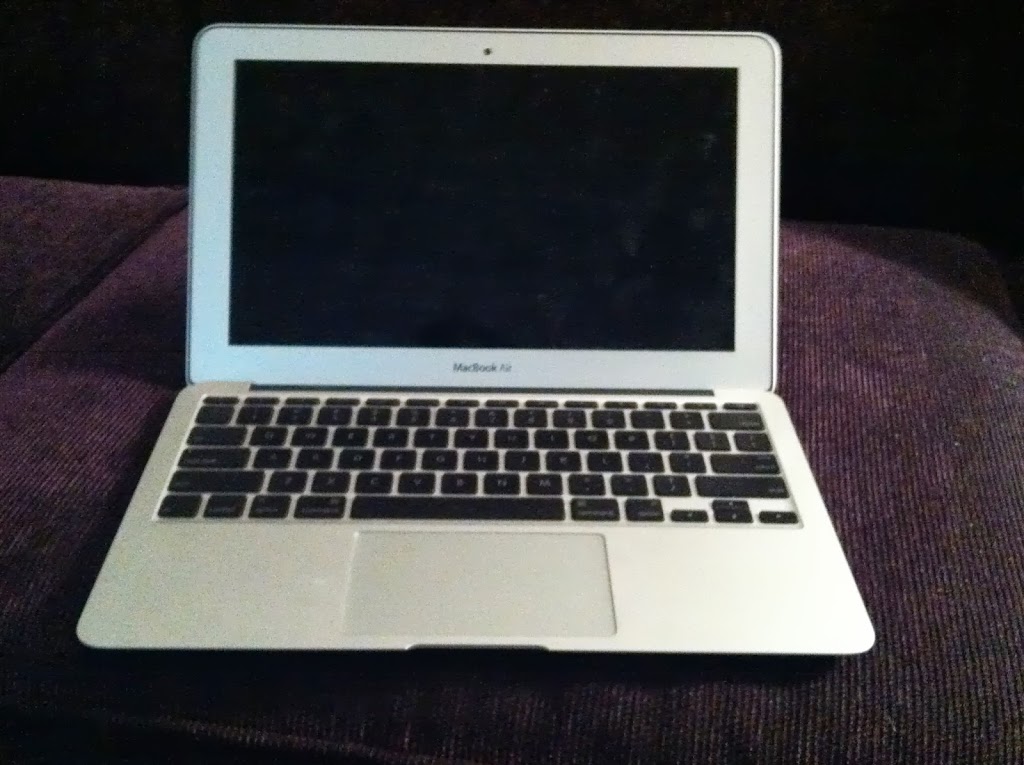
We’re Known by our Toys

THIS JUST IN: our society defines itself by its technology.

I know, I know. That’s a shocking statement, but let’s move quickly to acceptance, shall we? Humanity is beginning to truly realize its essence when we are creating, and so we create and build things, and use those things to make our lives easier, and thus we are very proud of those things. It’s the beginning of a theology of technology, and it’s a very natural…and, at it’s core, I’d say it’s a very good…inclination.

At first blush, though, those of us who don’t like to succumb to trendy things might see it as a mindless, materialistic “keeping up with the Jonses.” We might push back a bit (I remember when using a Mac or an iPhone was different, instead of trendy), perhaps by refusing to use what we prefer if it becomes too popular with everyone else (well, I still use my iPhone, but a lot of my colleagues are Android users…).

It’s just that sort of thing, though, that leads to some interesting statements about ourselves. When e-readers were becoming all the rage, I read an article (somewhere…the location escapes me at the moment) that humorously discussed how the Kindle would remove the status of literary snob. After all, no one could tell that it was A Tale of Two Cities that you were reading on the subway, only that you were carrying a spiffy little device.

Two jobs or so ago, I had a desk between two of my colleagues. The guy on my left used a PC laptop and carried an Android phone. I was in the middle with my all-Apple gear. The girl on my right was the most diversified…she used a PC laptop, an Android phone, and an iPad. Maybe I’m just geeky enough to notice something like that, but I think that it says something about us, something about the new way that we assess each others’ personalities.

Because we’re now not just reading A Tale of Two Cities on the subway with an e-reader. We could be using a Nook instead of a Kindle, or any number of tablets. Instead of noticing the book cover, we notice someone’s device preferences (which is a sad commentary on an increasingly illiterate society, but I digress).

Sometimes, especially among the geekier circles in which I make a living, I’ll hear people argue over things that I thought weren’t really things that we debate any longer. Mac or PC, iOS or Android. I’ve actually heard people argue over what’s better, as though there were some personality flaw involved with someone choosing to still carry a Blackberry.

I think, though, that the reason is because we’re looking for a way to stand out, to identify ourselves to others in a society (and especially in a workforce) that prizes homogeny and doing what’s popular. The thing with the diversity in the types of innovations that we create in our striving to fully realize our humanity is that they are created by different personality types, with different personality types in mind. Someone who uses an Android phone wants a completely different experience than I want. I want a totally different experience by reading on a Nook than someone else would expect with a Kindle. The issue is both the device and what the device accesses, as well as how it accesses it. Visual aesthetics are different. Different individuals are more concrete or abstract than others, and need a different sort of information structure to navigate the web that connects us to the world (a web that increasingly becomes a necessity).

So, as much as I want to tell you how much my Mac is better than your PC, there is no right or wrong answer here. What is present is an opportunity to learn about the person sitting next to you, to begin to understand how they think. That leads to understanding how they see the world. And that leads to understanding how we are more alike than different.

Which is just possibly how a theology of technology may begin.

Who said collecting expensive toys was a bad thing?

Steampunkinetics

Steampunkinetics

This is a multi-media piece call “Steampunkinetics 2013,” currently on display in Danvers, MA. The plaque on the side reads in part:

“‘Steampunkinetics’ is an arts and technology program for adolescents and young adults with Autism Spectrum Disorder (ASD) run at the University of Massachusetts Lowell. The mission of Steampunkinetics is to provide those with ASD the resources, skills, and support needed to create a unique and innovative work of art using technology and

Published!

It might be true, as it turns out, that some of the best ideas come to you in dreams.

Just before our daughter was born (almost two years ago now!!), I woke one night from a dream that remained clearly in my memory until the following morning. I knew that I had to write it down, because it was quite obviously the foundation for a story that needed to be told. We were in the early stages of planning our move northward at the time, and I think that’s what brought this dream about. In the dream, Karen and I were standing on a hill in our former city in Virginia, except the city had been abandoned, and we were looking out over the expanse of what used to be and remembering our lives there in whispers to each other.

A few seconds of dream, ultimately, but the ideas that followed took a life of their own, and I wrote as a labor of love in whatever free moments that I could find after our daughter was born, because she was forever connected to this piece of fiction in my heart. A few months later, it was edited and finished, and I’ve been shopping it around since. It was accepted for publication this week!

So, I’m excited to let you know that “Diaspora” is published in the May issue of eSciFi magazine. You can currently purchase a copy directly from Barnes & Noble, and I will keep you posted as it becomes available other places, as well.

I’d be honored to hear what you think!

Swimming up the Creative Stream

Poor Amazon just doesn’t know what to make of me.

That was the discussion that I had with a colleague tonight. She was talking about a book that she is reading about working with a specific component of the Autism spectrum.  We work together doing applied theatre with an agency that uses theatre to work with students on the spectrum. It’s one of the several things that I do for a living. I like being diversified. The variety is, as they say, the spice of life.

I don’t actually buy much from Amazon these days, but it was my go-to supplier for grad school textbooks, and music for a while. I’ve talked before about how I continue to receive emails for suggested purchases, ranging from theology texts to counseling texts to fiction to web development guides. I wonder sometimes if people like me don’t threaten to make the algorithms explode. We’re spread about everywhere, exploring and practicing all manner of different disciplines and craft, loving the variety and eschewing routine wherever possible. We defy compartmentalization, which is quite abrasive to a culture that is becoming increasingly boxed in concerning roles, expertise, and skill sets.

I used to have issues dealing with this. Even when I came to embrace the wildly different aspects of myself, I still felt as though I was continuously swimming upstream. It’s been quite refreshing to live in an area where a lot of creatives live very similar lives, simultaneously exploring very different pursuits.

Except that I don’t see this as a “creative” thing, at least not as the word is typically defined in regards to people. Or, maybe more to the point, I see it as a creative thing in the sense that everyone is creative. I’m such a passionate advocate of an interdisciplinary mindset because I believe that “cross-pollination” of different disciplines enhances everyone’s lives. We all grow, and we all benefit.

Of course, it’s difficult when you’re encouraged to become overly specialized and to fit yourself into a box. Many things worth having, though, are not easy.

Spend the rest of the week defying your boxes.

Photo Attribution: lovlihood under Creative Commons