The Nature of a Hero in “Flashpoint”

Screenshot of Flashpoint coverI’m not one to watch much television. Really, I’m not (I feel defensive considering what I’m about to write). I’m certainly not one to watch more than two episodes of anything in a night, and definitely not one to blow through a season of a program on Netflix in a week.

Seriously, I’m not.

So, here’s how this went down.

Just before moving into our new apartment, Karen and I sat down late one night too tired to do anything productive, and looking for something mindless to watch for a bit. She asked what I was in the mood for, and, being a sucker for police procedural dramas, I rattled off a couple of old standbys, none of which had anything available, or at least nothing current. So, Karen did some quick exploration, and asked about a program neither of us had ever heard of called Flashpoint.
Sure, I said, it looked good. It was only for an hour, after all,  and then we were going to bed. Except we were on the edges of our seats for that hour. And the next hour. And the next.

And now, a few weeks later, I only have a few episodes left of the last season available for streaming, and I’ve lost way too much sleep to this show.

Why? Because, seriously, this is out of character for me.

It’s not just the realistic and excellently choreographed action sequences. There’s some deep character development going on here, as well. And, while I’ll be the first to point out that the screenwriters have been slacking on the dialogue quality in this most recent season, there’s explorations of things that we all consider, things with which we all struggle. In short, there’s a lot to be said about the human condition in this program.

I’ve written before about how police programs…realistic ones, at least…tend to present the nature of a hero in the most accessible way, the way in which we all desire to be the hero and the way in which we most realistically could reach this desire. These are the heroes that are not bound to the pages of fiction or graphic novels, but that run toward the real violence and danger that lurks near us to hold it at bay while the rest of us run away. As police programs go, SWAT teams are perhaps the most interesting choice for this type of exploration, because they are the heroes for the heroes, the best of the best who are called upon to handle the worst of the worst. When these teams arrive, the last resort has already been reached.

Flashpoint presents realistic heroes in this profession. They struggle with the ramifications of violent actions. They fight to push down their own instincts and desires to protect the lives that they are sworn to protect, and they don’t always win that fight. They are there, as the characters proclaim more than once, to “keep the peace,” but, moreover, to “respect, connect, protect.”

This isn’t a program where every episode ends with violent action (although there does seem to be more violent resolutions in the most recent season), but rather violent solutions occur only in a realistic number of situations. While a level of seemingly callous separation is seen in the characters (when one of the snipers has a clear shot at a suspect, the radio call is, “I have the solution”), this is balanced with the characters attempting to deal with the aftermath when they do take a life to protect someone innocent.

What’s most fascinating about this program, however, is played out in the premise. What makes the “Strategic Response Unit” upon which the show is based different from any other SWAT team is their training in psychology and negotiations. They don’t simply arrive and attempt to talk down a subject while waiting in the wings to respond with force. They dig into what’s happening in the individual’s life. The writers continuously do an excellent job of bringing out the perceived villain as an everyman character, someone who represents an extreme response to situations that would bring frustration or anger to any of us. At the end, the viewer finds themselves condemning the person’s response to the situation, but understanding how they feel.

This attempt to understand leads to not only many peaceful resolutions for the Strategic Response Unit, but discoveries of other victims that may not have otherwise been made (frequently, the perpetrator is a victim), as well as forcing them to make serious examinations of their own lives.

I think that Flashpoint exhibits yet another aspect of the nature of a hero, that of seeking to understand the villain. In short, empathy. Even those who perpetrate the most heinous of acts did not arrive at the point at which they were capable of those acts in a vacuum. We are who we are, and we do what we do, for a reason. The hero understands that there is a thin line separating them from the villain (think Batman and Catwoman), and that only the choice of how to handle a particular event marks which side of that line one is on. In short, the hero recognizes human fallibility, understands that we all make mistakes, and sees every person, both those that they protect and the villains that they fight, as worthy of mercy and redemption.

Labor Day Trip

Last weekend was a holiday weekend in the U.S., Labor Day, a day which was originally intended for those in professions like customer service and retail to have a day off (my feelings about how its anything but that is the subject of another post). We Americans recognize Labor Day as the unofficial end of summer, as many public school systems start soon after that weekend if they already had not, and the weather begins to be cooler as we enter September.

For the long weekend, Karen and I had planned a final beach excursion for the summer. I’m thoroughly enjoying the fact that we can now be at the coast in 40 minutes or less, and our daughter has shown an early love of the water. Still, cold weather comes early to New England, so there won’t be many of these day trips left (true New Englanders call it “cool” now, but this is one of the ways that I can’t help but reveal that I’m a transplant).

We knew that our planned beach trip was off when we awoke to a steady rain on Monday morning, and so we set out to find other activities that we could do with our daughter (to whom I was already having to explain that she wouldn’t get to go to the beach as planned…did I mention she’s not yet two?). After realizing that lack of reservations and other logistical issues were ruling our some museum trips that we wanted to take, we had resigned ourselves to catch up on some reading when it happened. Our daughter, enthusiastically racing across the living room to show me something, tripped, and went full-tilt and face-first…or, more precisely, nose-first…into the sofa.

Now, I’m usually the excitable parent, while Karen is the calm and unshakable one. I’m the one who is generally ready to go to extreme solutions while Karen is the one shaking her head and telling me that said extreme solution isn’t necessary (I once wanted to call Poison Control because she put a sticker in her mouth. Don’t judge, okay? I’ve never done this parenting thing before). So, when Karen succinctly indicated that medical attention was likely warranted, I knew that I was correct in my assumption that we had a situation on our hands.

And, so, Labor Day 2013 saw our daughter’s first injury-related rush to an urgent care. Not an awesome way to spend the day.

It turns out that, as bad as it looked, there was nothing there that a cold pack, Tylenol, and some TLC wouldn’t cure. In fact, our daughter woke the next morning to tell me first thing that “My boo-boo feels much better” (did I mention she’s not yet two??).  Insert enormous sigh of relief here. I was thinking, though, that, as much of a bummer as it was to spend our Labor Day in such a way, it was much more tragic for our little girl. She was having a grand time running and playing and showing us things that she could do and build with her toys, when her grand time came to a screeching halt by a mere mis-step. Six inches the other way, and what had painfully disrupted her entire day would simply have been another toddler’s fall. There’s something absolutely heart-breaking about the entire situation when I pause to see this from her tiny perspective.

Many things change, I’ve found, when viewed from her perspective. Monday’s lost plans wouldn’t have been nearly as sad had the day not involved an injured little girl. It’s one of those ways in which being a father has changed me. I’ve never found myself so easily seeing the world from someone else’s point of view before now.

Something equally as huge is the way in which having a daughter makes me self-aware. I see myself through her eyes, as the superhero who can fix anything…any broken toy, the shoe that gets stuck and she can’t take off on her own. I’m the one who will carry her up the steps that she’s too tired to climb. In her words, “Daddy will fix it.” I’m in no way worthy of that adoration.

Both of these awarenesses…seeing the world and seeing myself from her perspective…has changed me a great deal as a human being.

The result is humbling in ways that I can’t even find words to write.

Inwardly Linked, and a Downward Spiral

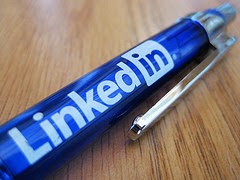
LinkedIn pen

I’ve never made a secret of the fact that I hate the monster that Facebook has become. I avoid that network at nearly all costs (as the digital sagebrush blowing across the face of my dusty profile will attest). I use several other social networks, though (you know, the non-monsters), and one of them is LinkedIn. This is because, in my new vocation especially, it’s how you get jobs. LinkedIn profiles are just what you do, and what you use, if you work in the world of technology.

I like LinkedIn, though, because it’s relatively isolated and specialized as a network, which is exactly what a professional network should be. I post professional items of interest there that generally wouldn’t go into my other networks, mostly because they just wouldn’t be of as much interest to people elsewhere. In that way, it remains a bit of a mystery to me, because (here’s a shocker) I really don’t get corporate culture. I don’t understand business-speak. I sometimes roll my eyes at the digital  presences of those who are acting professional, as all of us do, in the workplace…that is to say, different than they would anywhere else. That doesn’t take away from the fact, however, that LinkedIn has its uses, and they are very credible uses, at that.

If our culture has ever been guilty of anything, it’s the lie of the self-made-man. “Work hard, play hard” has somehow morphed into “work until you drop if you know what’s good for you, and then play if you have any time and/or energy left.” America is, if anything, a culture of hard-workers. Perhaps I sound cynical as I say that, but as it becomes easier and thus more expected to work from anywhere, then it becomes more natural to work all the time. And, because that’s often the professional expectation in today’s world, it also filters down to the educational realm. The drive to succeed in school at earlier and earlier ages (read: pre-university) becomes more and more intense, robbing children of their childhoods way too early.

Don’t hear me say that I don’t value education…quite the contrary (as our daughter’s love of books and extensive vocabulary would prove, to say nothing of the bookshelves of old grad school books lining our walls).  I think, though, that pressure to achieve doesn’t belong in our academic settings before the university level.

So, the story that ran a few days ago that LinkedIn will now allow children as young as thirteen years of age to have profiles caused my heart to sink. Because a professional  presence isn’t something that a thirteen-year-old should ever, ever have to concern themselves with. They will reach an age when they have to do that all too quickly, when they spend increasingly long hours at their job just to make ends meet, at which point, no matter how much they might love what they do, something of their innocence is lost.

This is, at the end of the day, a profit-seeking move for LinkedIn, I’m sure. They have to, after all, compete with other networks (although that is something that I don’t understand…they do one thing well, and I’m a firm believer in stopping there). This will prove a profitable venture for LinkedIn, I’m sure, but it will prove a socially costly mistake if it leads us to expect higher professional and academic achievement from our children at earlier and earlier ages.

Let them learn. Let them play. Let them hold onto those days to which many of us wish that we could return.

And let’s not make them rising corporate stars quite yet, okay?

Photo Attribution: Sheila Scarborough under Creative Commons  

Dancing on an Escalator

Last night, I took my daughter to Barnes & Noble to enjoy a cookie and peruse the children’s book section. When leaving the store, she stated that she wanted to go down the escalator. We walked to the escalator, and, holding her hand, I stepped on first. She, at that moment, decided that she wasn’t so interested in the escalator suddenly, and dug in firmly, refusing to step on, but still holding firmly to my hand. 

What followed was a most interesting dance as I tried to not pull her over and not go flat on my own face at the same time. My Chaplain-esque moves were, I’m sure, the highlight of the evening to anyone watching. 

Virtual Theatre

Concert lights, attributed to iurte under Creative Commons

Sometimes I feel as though I’m glued to a computer screen way too much.

Now that I’ve changed careers for my day job, I spend most of my day in front of a computer writing code or designing page layouts. It’s fun, don’t get me wrong. But I lament (as does my back after several stationary hours) the loss of the chances to be more physically active that I used to have. I’m still involved in theatre, and this is a huge outlet for me to be physically active…something that I desperately need, now. Between those two things and trying to keep some kind…any kind…of writing rhythm, I stay incredibly busy.

And I continue to be amazed at how much everything is alike in so many ways.

I listened to an interview with a web designer several months ago. She, too, had worked in theatre before beginning a career in the web, so there was immediate common ground for me there. She likened scenic design to web design, and I’m inclined to agree with her. There’s a creative component and technical component to each. The scene designer begins with sketches for what the setting of the fictional world should look like. Then, logistical issues are considered. Models are built. Working construction drawings are made, and then the lumber and drills and saws come into play as the sketches begin to take shape. Everything I know about power tools I learned in a college scene shop. In my experience in the theatre, there is almost always a technical director who oversees the construction of what the designer envisioned. He or she works off the drawings the designer provides and handles the technical details of the building.

The web designer also begins with drawings, but of a digital variety. Wireframes and prototypes are built in software like Photoshop and result in a visual model of what the website will look like. A developer then takes those prototypes and begins writing the code that will build them for your browser.

I began my theatre experiences on the technical side. I spent a lot of time doing the technical work of implementing others’ designs. I did my share of designing, as well, but me and a sketchbook were awkward companions, at best. I do the same thing for the web. I do some design work, but generally only page layouts, not real graphics work. I spend a lot of my time coding what others have designed.

Another similarity is that the web has its own sort of rehearsal process. As I write this, I’m getting ready to move a big project to a testing server for a dry run of how it will work. This is only for a select few people…the world won’t see the site until we’re settled that everything works the way that we want. It’s the Internet’s version of a dress rehearsal. A tiny audience will preview what the real event will look like before the curtain goes up on opening night.

There are a lot of other similarities, as well, too many for one post, I think. Isn’t it so fascinating, though, how different disciplines are so much alike the more one gets to know them?

Photo Attribution: iurte under Creative Commons